
Do you know that Chinese rules of behavior at a table have almost three-thousand-years history? It is interesting that many of them are still strictly followed in Chinese restaurants and even in have dinner at home.
The knowledge of these rules of table etiquette will help you to feel comfortable and free during a lunch in China or Chinese restaurant.
The first appearence of the Chinese etiquette
Chinese lunch etiquette and rules of conduction at a table appeared during the period of dynasty of Zhou. It was in 1045-221 years BC.
Care of old men and patients, and also rituals of honoring of deceased ancestors are considered as one of the most ancient Chinese traditions. Gradually they became closer to contact process of preparation and acceptance of food. That’s why in China also there was a special set of rules of behavior at a table.

Formal dinner party
Of course, earlier the Chinese traditions were much more difficult, than today. However some of these traditions are followed till now.
So, in ancient China the owner had to wait the arrival of guests in the yard of the house. On arrival all invited guests exchanged greetings with the owner. After official part all moved to a drawing room where began easy conversation during which owners gave tea and snacks.
Soon guests were invited to a table and places at a table were strictly distributed. As a rule, the place at the head of a table opposite to an entrance door belonged to the guest of honor.
During a lunch the owner with his own hands put food in a plate of a guest as a sign of the hospitality. So do not be surprised to see the same procedure when you have dinner while visiting your Chinese friends.
After a nourishing lunch all guests followed the owner to a drawing room. Where conversation continued behind a cup of tea. Pleasant slow conversation was obligatory part of formal dinner parties. Have it in your mind and never neglect conversation if you don’t want to offend the owner.

Chinese sticks are not a toy!
Never play with Chinese sticks. Sticks are invented to use them while eating. Any other actions, even playful, will be regarded as roughness in China. Not to mention that is strictly forbidden to point to someone by a chopstick.
You don’t knock with chopsticks to a table or ware as in this way at restaurant visitors let know that the food moves too long. In a lunch situation on a visit the similar behavior can offend the host.
And by no means, never stick two chopsticks in a bowl with rice! In Buddhist culture it means that you wish death to all sitting at a table.
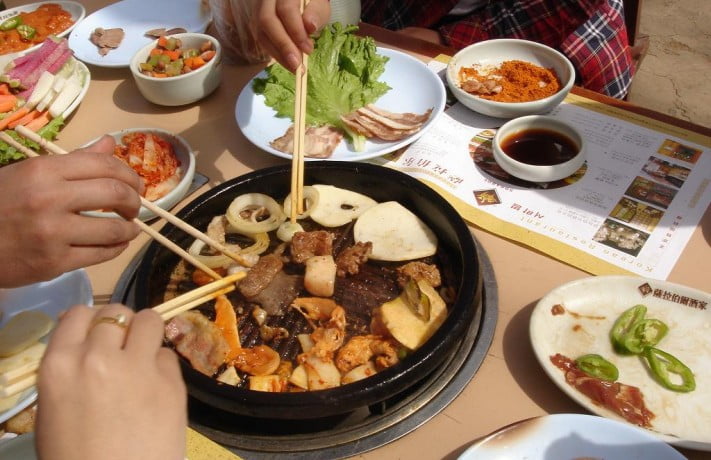
Round table
As a rule all tables in Chinese restaurants are round. Dishes are served on the special rotating disk in the middle. Thus each guest can easily reach every dish he wants.
Tea is “the head for everything”
Any lunch or dinner in China can’t be without cup of green tea. Before a meal surely green tea are offered to guests. To leave an untouched cup of tea on a table it is considered impolite and even a rough act. Even if you don’t love green tea, simply drink a little as act of politeness.
Eat a little more!
According to old tradition the owner of the house put a meal in a plate of the guest and asks him to try everything that is on a table. Such behavior seems to be to Europeans a little persuasive. But in China is a sign of hospitality.
Consider that it is impolite to refuse food which was offered to you. If offered meal you can’t eat at all, try at least the trifle and leave food on a plate.
If you put a plate aside where remained a little uneaten food it means that you are already full.
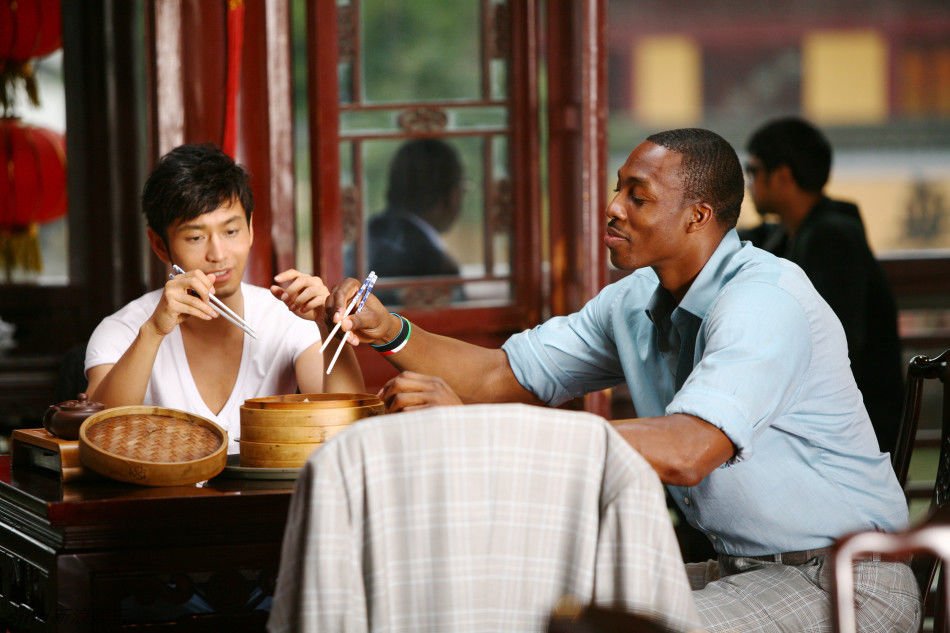
Seniors eat the first
Chinese respect parents and senior family members very much. So the honor to begin a meal the first is provided to them. If grandmothers and grandfathers during a lunch are absent so the senior man in a family starts eating.
The table etiquette and some manners of behavior at a table in China are similar to European: it is necessary to chew slowly, not to champ, not to sip.
Guests are recommended to follow easy conversation and as often as possible to thank to owners for quality and quantity of the prepared food. If you follow these simple rules, you will be surely invited to Chinese lunch once again!
No Replies to "Chinese etiquette and rules of behavior at the table"