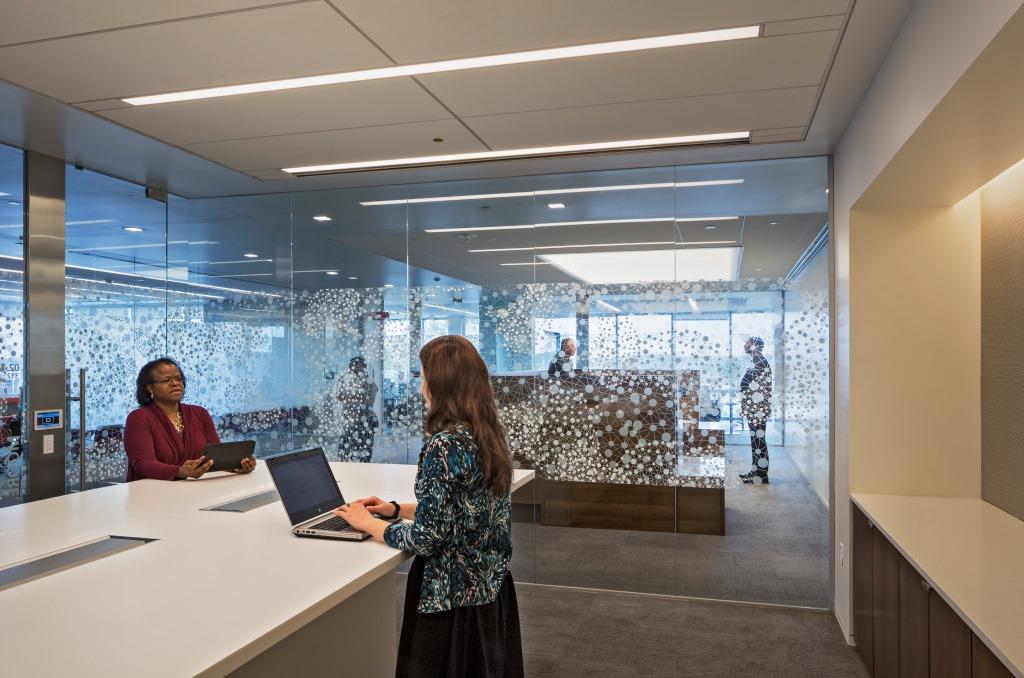
Modern methods of management and organization of the office space requires open space technology, and office partitions are not the details that need to be neglected. Thanks to them, you can create different zones in the office, from executive offices to reception areas. In addition, properly fitted and installed partitions significantly reduce the need for office space.
Depending on the task can use the following types of partitions:
- stationary partitions
- mobile partitions
- glass partitions
Stationary office partitions
Stationary office partitions are of a sufficiently broad range of application. Designed for the organization of the space in the office, they are able to divide a room in the necessary rooms: office, lounges, meeting rooms, conference rooms. In addition, the walls of this type can serve as the perfect complement an existing room design.
Competent organization of jobs and security of room space is not only the efficient operation of the office, but also a guarantee of good well-being of all people working in this room.
To achieve such a result at minimum cost allows the use of office partitions. Such office partitions, and their modular design allows, if necessary, an easy transformation and alteration. In this case, we will focus on office partitions made of aluminum profile.
The unquestionable advantage of aluminum partitions should include their lightness in weight as compared to the partitions of PVC profile, which uses steel structures.
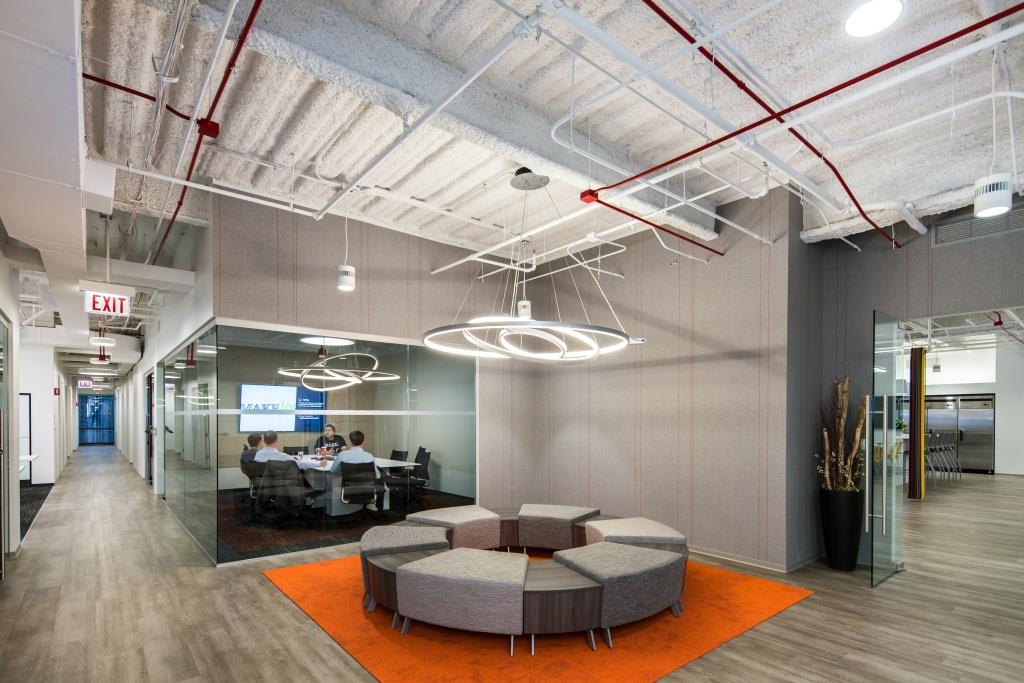
Mobile office partitions
Mobile partitions excellently zone the premises and distribute office space, helping to allocate personal workspace for each employee without complicated repairs. Thus, partitions can save time and money and the use of sustainable and durable materials provide security of the personnel and no adverse effect on their health.
Unlike stationary partitions – mobile partitions are not fixed to the floor or ceiling. They represent one or several modules fastened with connecting struts in a particular configuration. Mobile partitions are easy to move, and are produced in a different configuration. In addition, a number of structural and decorative features of mobile partitions make them an ideal framework for the organization of employment of the office staff. The main advantage of mobile partitions – it is an opportunity to maximize the use of the surrounding space.
Jobs created on the base of mobile partitions can be easily and quickly completed with office furniture, hardware and accessories. On the walls various shelves and boxes can be hung.
Mobile partitions are ideal for creating not only jobs of employees, but also for creating classrooms of middle managers, service and utility rooms.

Glass office partitions
All-glass office partitions are among the most modern and convenient instruments of zoning the area. The appearance of glass office partitions turned general idea of how might look the offices of companies, specialized salons, shopping facilities and reputable institutions.
In general, wiyh the help of partitions any large room is transformed into a rationally structured office, organized by type of «open space». As the seams are practically invisible, all-glass office partitions visually expand the boundaries of space, eliminating the employees and customers from feeling pinched.
Using of transparent structures create an atmosphere of confidence and ease, it allows longer work in daylight. All-glass partitions make your business open and understandable for customers, and the leaders of the transparent walls make it possible, while maintaining isolation, effectively manage thepersonnel and, thus, work as a team.
The play of light on the glass creates a sense of solemnity and celebration. Designs of any shape and aesthetically make the interior look fashionable, thereby enhancing the prestige of the company.
No Replies to "Office space partitions. What are their types, material and way of usage?"