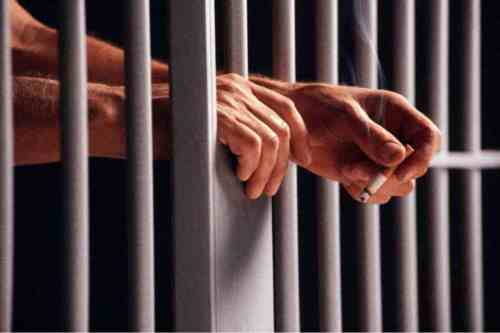
“The modification of behavior ” in practice. “Nothing will cause such terror for prisoners as so-called program of “behavior modification “, which is not surprising – writes a columnist of “New York Times” Tom Wicker.” The modification of behavior is a very broad term that can mean everything – from neurosurgery to mental conditioning, as described in the book “A Clockwork Orange.” It usually involves the experimentation with drugs, and in almost all cases, its aim is to get the docile prisoners, but not the honest reformed citizens.”
Powerful drugs that cause disgust, systematically used by the prison`s psychologists and government (authorities) in the programs of “behavior modification” on the basis of poor communication, “unacceptable” behavior with pain and vomiting. In behavior modification programs in prisons of Iowa state the prisoners, who violated the prison rules of conduct, without their consent was injected a drug called apomorphine. “After 15 minutes they started an uncontrollable vomiting. The vomiting lasted from 15 minutes to an hour. At the same time there were an intermediate cardiovascular disorders, including the changes in blood pressure and heart disorders.”
Having considered the petition, which asked the prisoners, an USA appeals court qualified this “treatment” as cruel and unusual punishment, contrary to the 8th Amendment to the US Constitution.

Bureau of Prisons medical center in Springfield, Missouri, applies the sensory deprivation, “Unruly” prisoners were placed “in solitary cells, having a circular form as dial shape, without radio and literature, and then, if prisoners behave according to the certain rules, they gradually move from one “level” to the another, each of which had the larger “privileges” than the previous.
The prisoners for several months and even years were contained in such single cell for the refusing to be obedient robots. Ironically, this Springfield program known as START (Special Treatment and Rehabilitation Training – education through a special treatment and rehabilitation), although, in this case, would be a more appropriate program STOP (Stop Torture of Prisoners).
In the state of Connecticut the prisoners subjected to the electric shock when they view the slides, which are showing “undesirable” behavior; this process is combined with a hypnosis.
Psychological degradation, endless suffering, isolation, life-threatening drugs – this is a “behavior modification” in action. But if you think that “behavior modification” is limited to the above practice in prisons and drug treatment – in the psychiatric institutions, the reality is quite different, they have many other controversial forms of expression and seek their victims everywhere.

The main points of behavior in prison:
1. Think about the reasons which led you to prison. You have done something serious? If so, swear that it will never happens again.
2. Do not show the emotions associated with fear, sadness, weakness.
3. Learn to play sports and intellectual games (such as chess) with prisoners and by your own, to pass the time. Caution: do not play the gamblings, if you must pay for the loss.
4. Cultivate yourself. Time will run faster, and you will be able to gain the useful knowledge and skills.

5. Be prepared for a possible gender separation in prison.
6. Do not “knock”. If you see something illegal or violent, leave and do not disclose any information after on the interrogation. If you become known as a snitch, the other prisoners will avenge you.
7. Beware of rape.
8. Shut up about your wrongs.
9. Keep your mouth shut about your personal life, family or criminal history.
10. Do not discuss the personal behavior or feelings about anybody. At the same time, you should not get involved in the affairs of other prisoners.
11. Try do not break the discipline in order to maximize the likelihood of parole.
No Replies to "The modification of behavior in prison. How to behave in prison?"